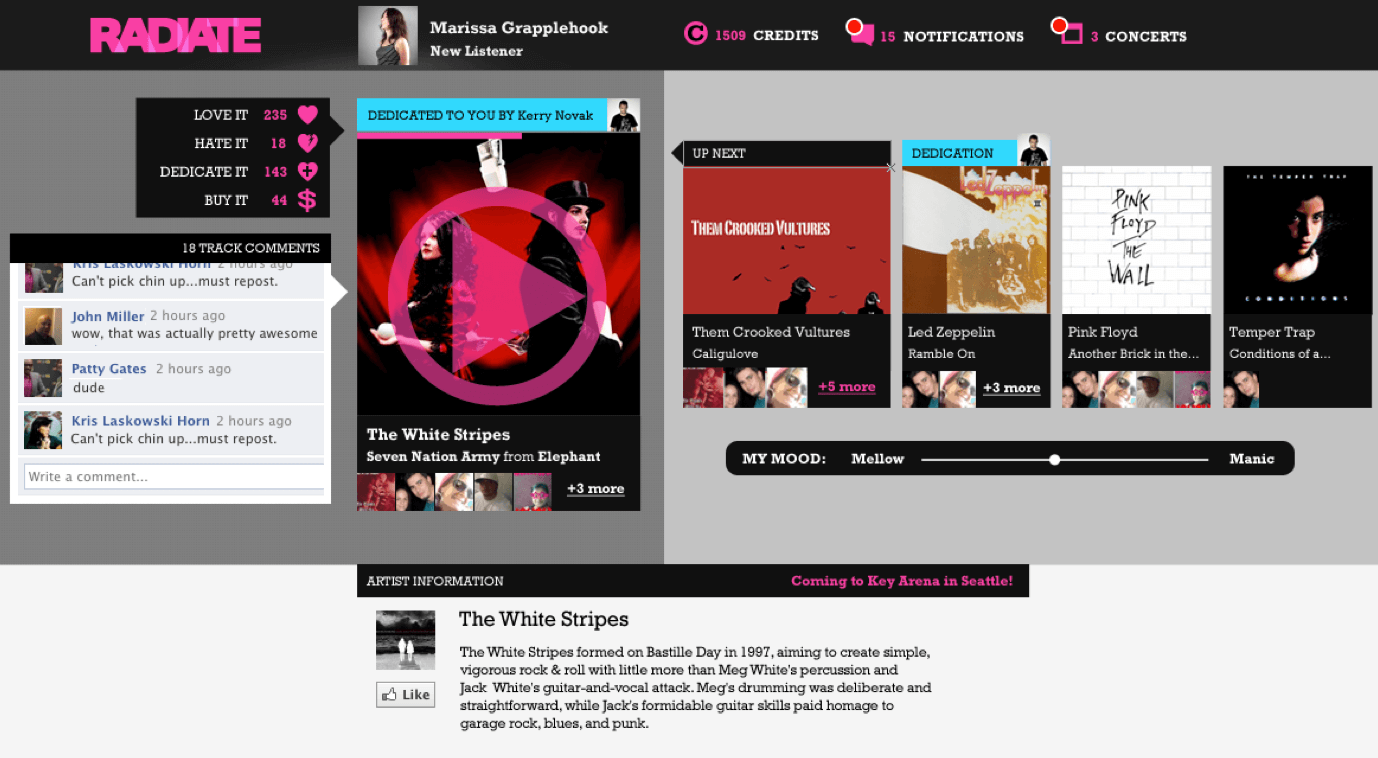
Radiate was a startup that sought to create a new streaming music service with a unique social component. As the User Experience Consultant, I worked with the Founder to define the product, craft the user experience and share that with the UI Designer, Data Architect and Engineering Team to build an MVP.
Finding music that you want to listen is overwhelming:
- Self-curation takes too much effort
- Readily available recommendations come from crowd-sourced algorithms or public sources: both lack quality and trust.
Radiate’s Goal
Envision a product where users could create a social network, and directly effect what their friends would hear within the service. Create a working demo that could be presented to potential investors for angel funding.
The Process to Get There
For the scope of the MVP, we interviewed a narrow range of people who represented our key market: twentysomethings who identified as liking to listen to music. From these interviews, we created personas (see below) whose user journeys, and later user stories defined what product would solve for. Later, the personas were used again to articulate to investors who our users were, how they’d use the product, and why they’d want to use Radiate.
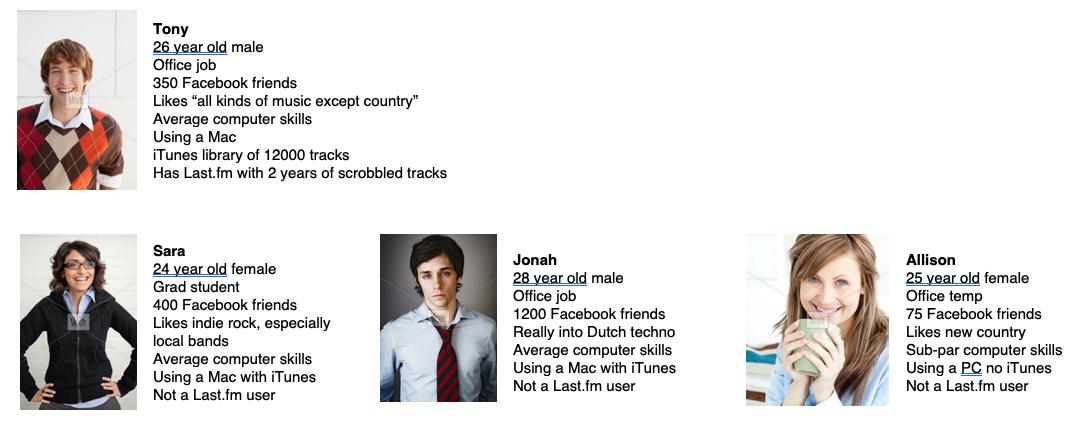
Radiate user personas
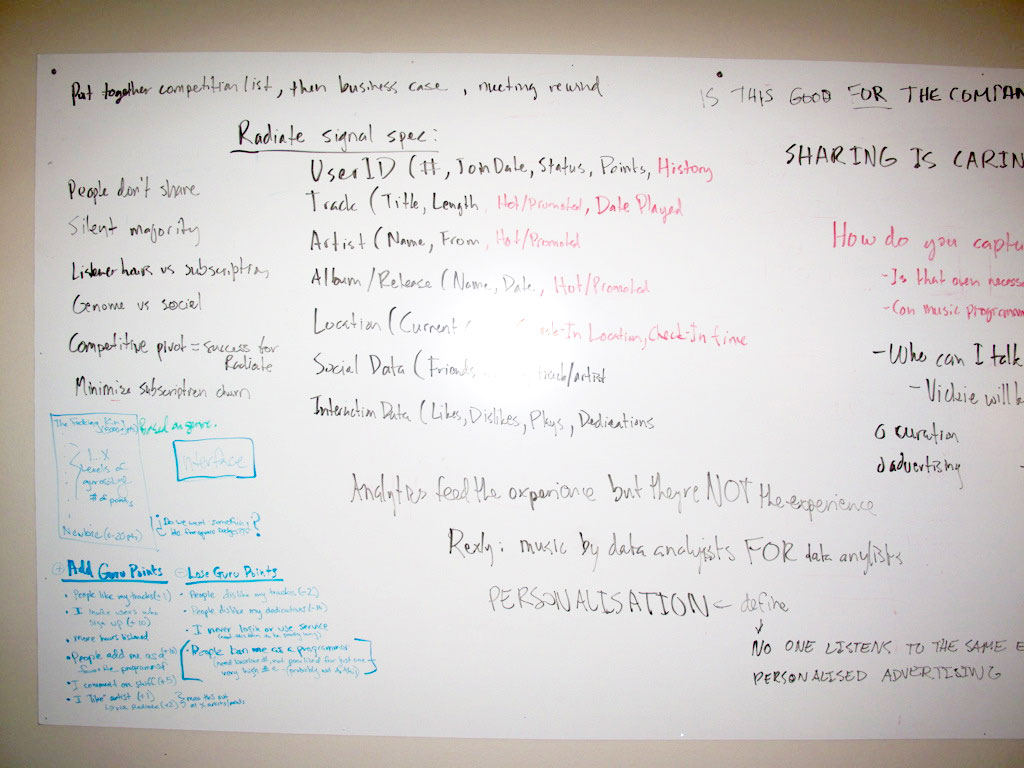
In the interview process, we learned that a large part of how users consume music is based on what’s been recommended to them by friends, coupled with their current mood (i.e. what they’re in the mood to listen to). Thus, beyond just playing music, the essential part of the experience needed to filter the recommendations they were receiving through friends with their current mood.
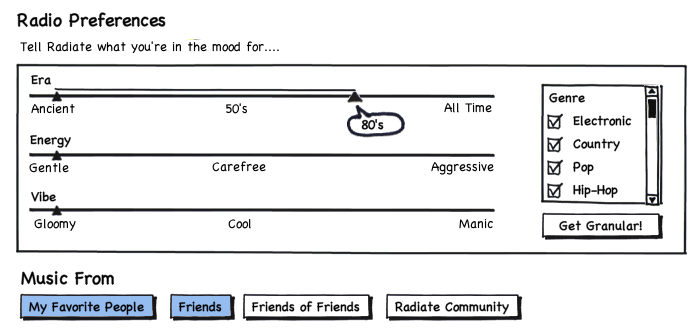
Listening preferences tuner wireframe
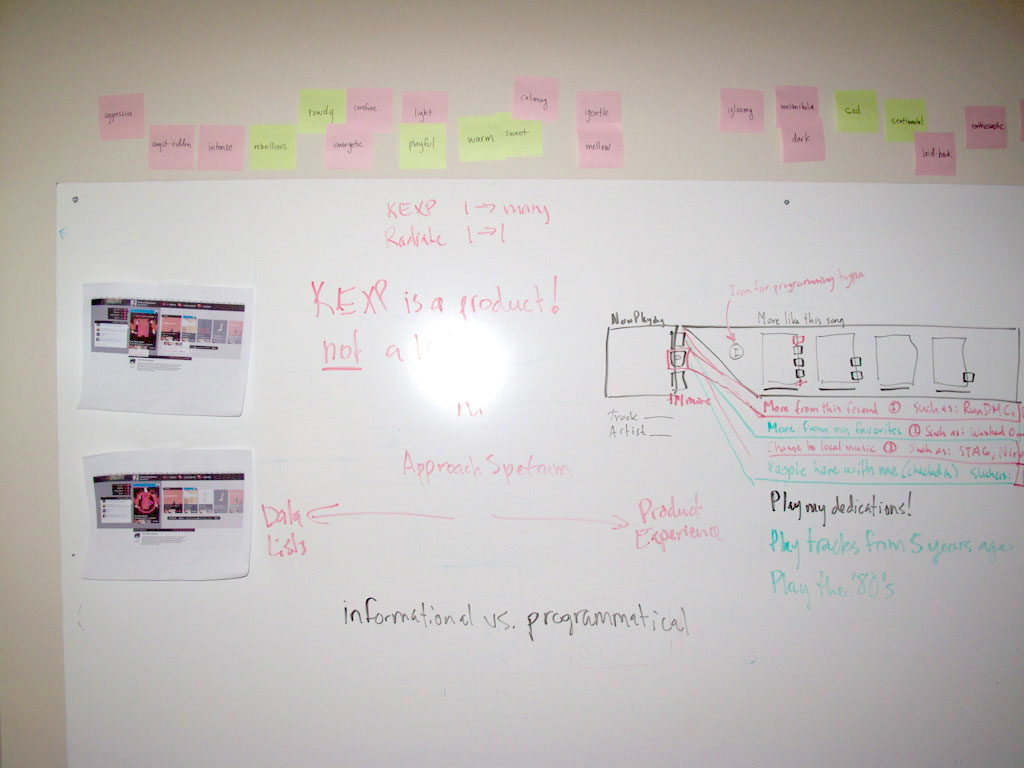
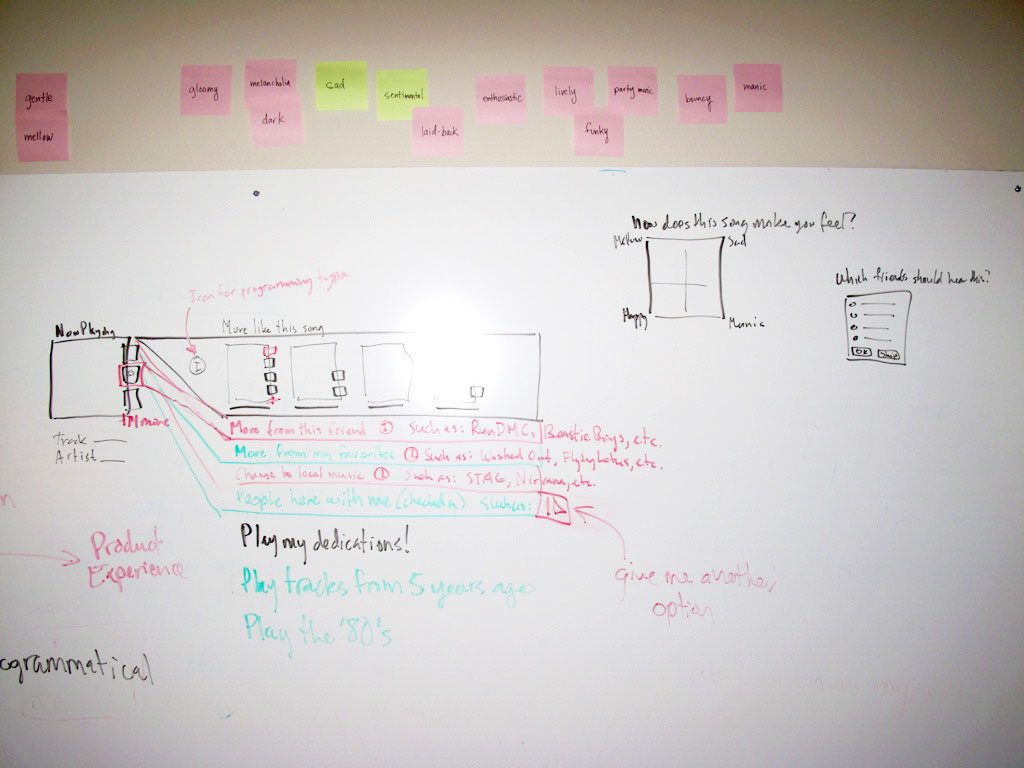
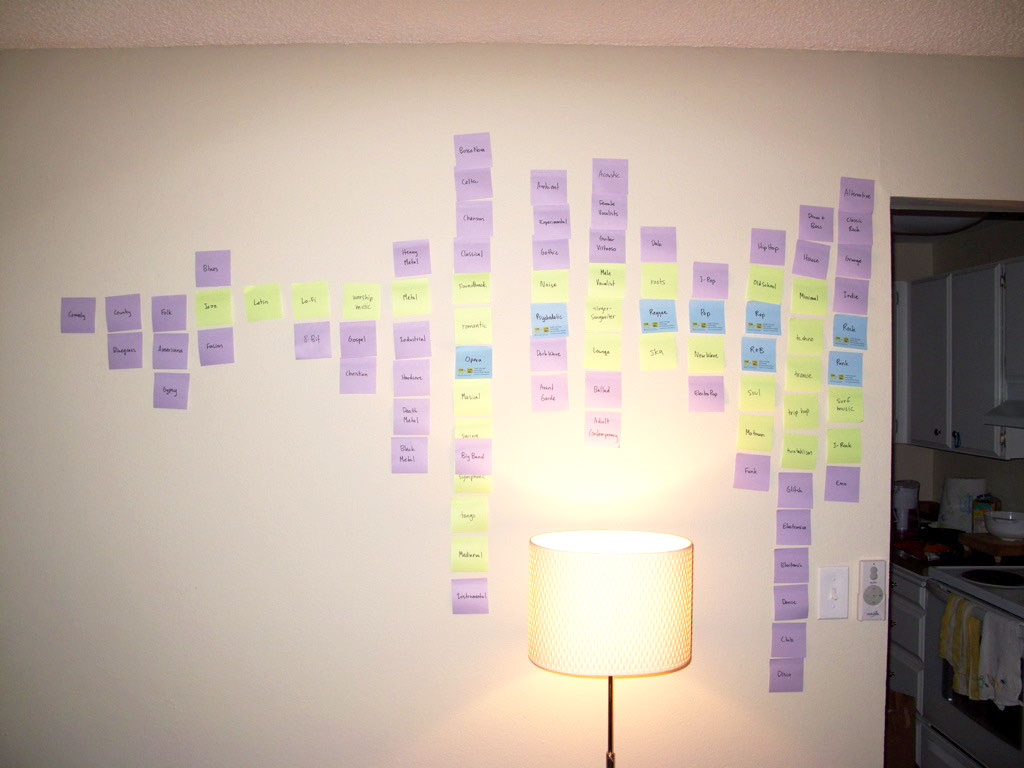
How would these sliders be converted into data that could be used by the algorithm? Using the genre and mood tags provided by the Echo Nest API (our data source), we modeled Radiate’s energy and vibe taxonomies. Hundreds of sticky notes covered the walls of our office space, meticulously ordered on the vertical axis by vibe, and on the horizontal by energy.
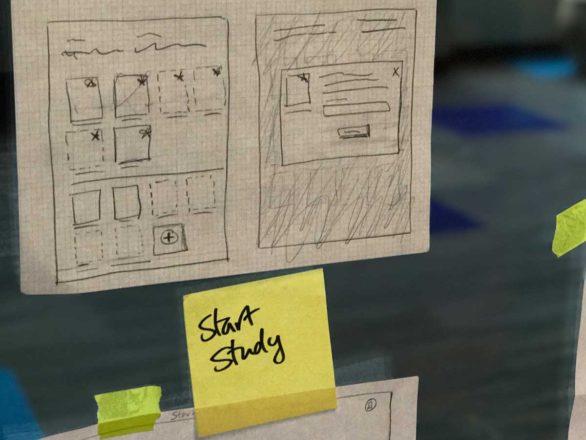
I then designed wireframes using Balsamiq that represented the main screens within the app. I went back to our interviewees at key points to ask:
- Do you understand what you can do on this screen?
- What is working for you?
- What is missing or unclear?
Once wireframes were solidified, the files went to our UI designer and development team. I wrote up the use cases and collaborated on the test script that would prove that our product worked.
Successful Results
Radiate was built as a Facebook App, and presented to investors over the next six months to investors by the Founder.
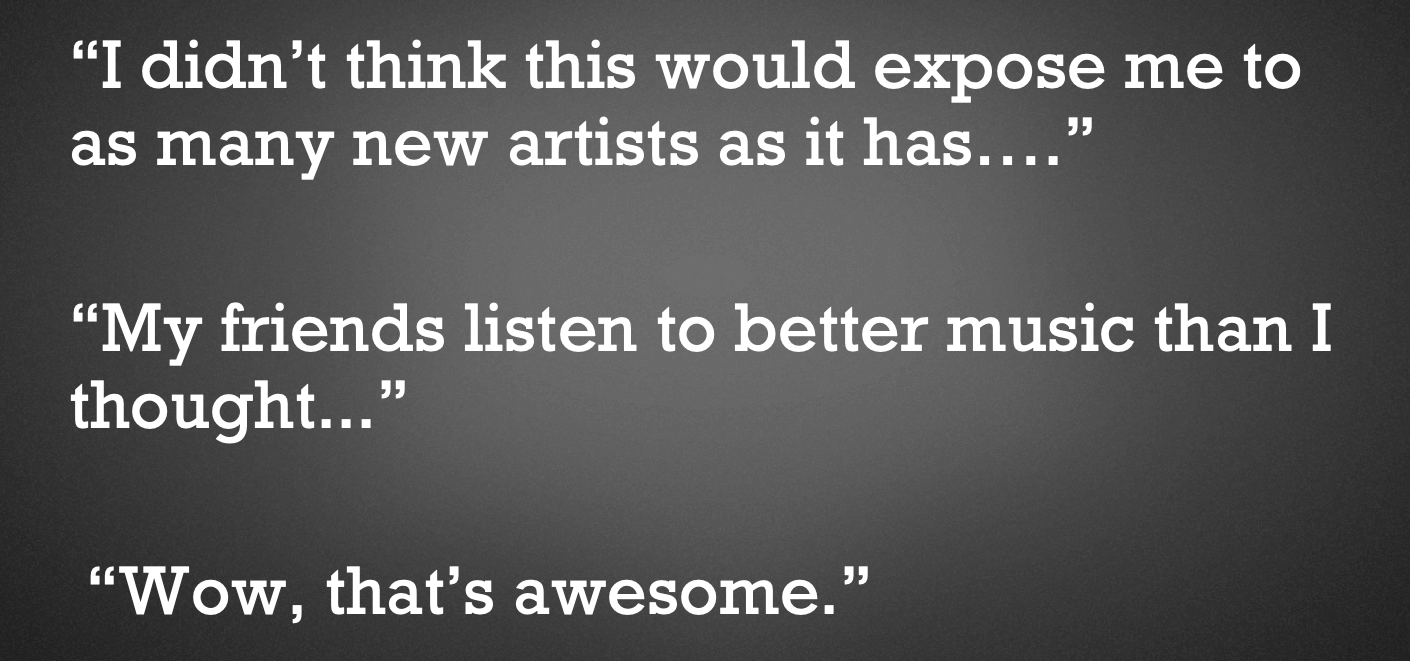
Demo user feedback
Ultimately, it was not funded and the project ended. But it garnered positive feedback from those who saw and tested the demo.
Year: 2012