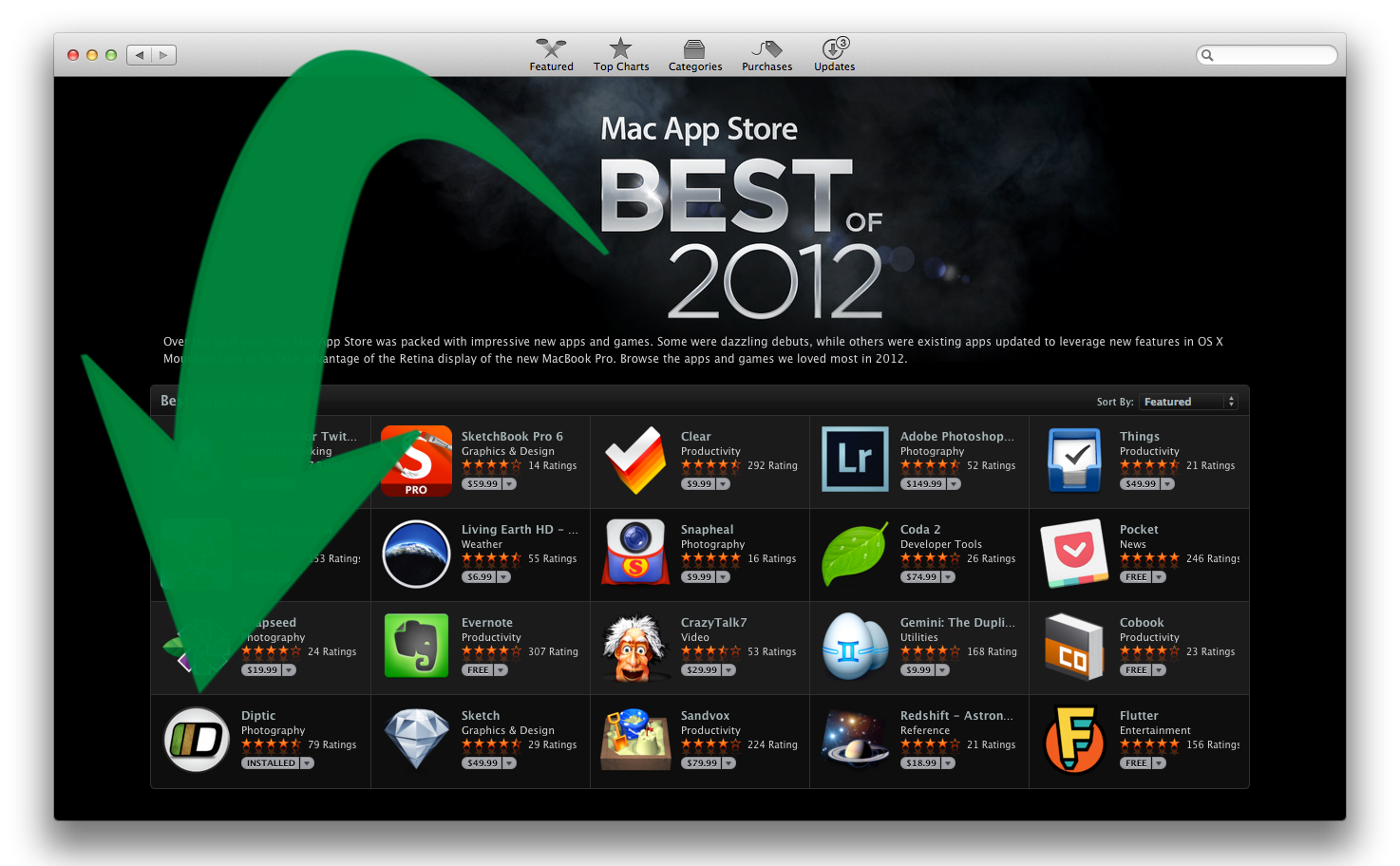
I conceptualized Diptic, the first photo collaging app. I developed the original concept, designed the user interface, created application artwork and worked with a team to bring it to market. Since it’s launch in 2010, Diptic was recognized by Apple as an App Store App of the Week, one of the Apps of the Year in both 2012 and 2013, and has consistently been named one of the top apps a photographer needs to have in their toolkit.
Approximately 3.5 million people have downloaded Diptic since it’s launch in 2010.
Diptic was my first experience with both product and UX design. As a photographer and artist, I have always been excited by the diptych or triptych forms of presentation as a means of expression. Juxtaposing related images thematically feels powerful, both in the ability to say more than a single image and even how it can tell a story.
When I first got my iPhone, I searched for an app that would allow me to create diptychs. There wasn’t one. Internet research showed that other iPhoneographers were also looking for an app to do this.
The Startup Process
I started meeting with a team at my company for after-hours whiteboard sessions in 2010, while we planned for and evaluated a series of app concepts to produce our company’s first iOS app. I pitched the idea of a diptyching app. The team agreed that it was a unique concept that would fulfil and unmet user need in the app market.
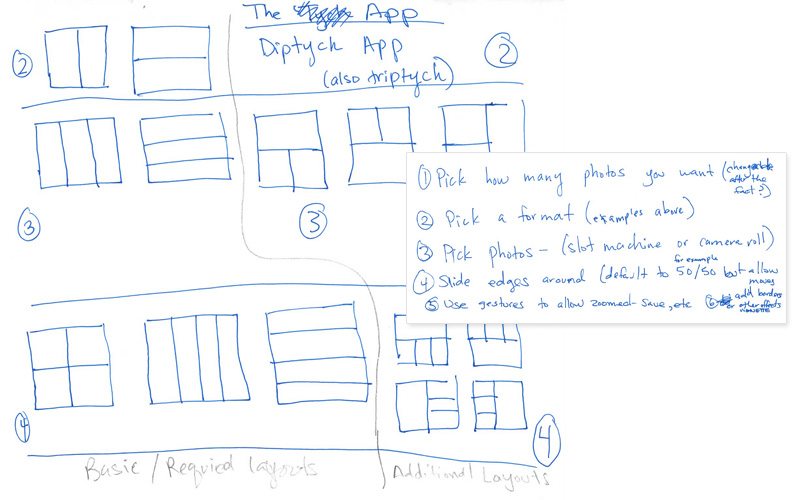
I started by sketching out the screens, workflow and possible layouts (the first sketches can be seen below). I presented the concept to Peak Systems (my company at the time), and together with a team of project managers and strategists, we worked with a developer to bring the app to market.
For the first version, I sketched interface concepts, described user stories, created wireframes and flow diagrams, helped write the functional spec, wrote marketing copy, created in-app icons and supporting images, designed use cases and helped build the Diptic community using social media outreach.
Growth and Strategy
Diptic launched in June 2010 after a just a month of development, testing and evaluation sprints. The simple app I dreamed up was live! When Instagram launched a few months later and mobile photography really took off, I learned from our expanding user base just what people wanted their apps, and specifically photo apps, to do for them.
Since the MVP, we have continued our development cycle for Diptic, expanded to new platforms (Mac OS, Windows and Android), created sibling apps Diptic PDQ and Diptic Video and released several new versions of the main app every year.
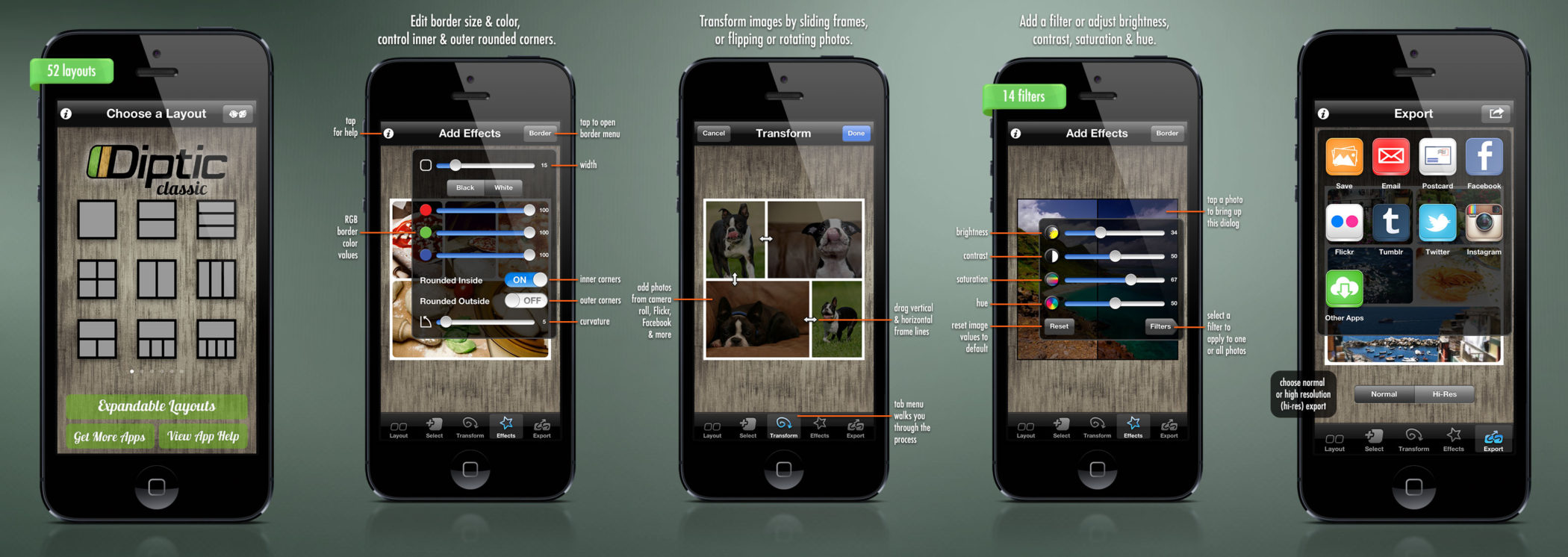
I rely on user feedback, app analytics, user research, reviews and competitive analysis to decide what we should add to Diptic, what is working, and what isn’t while staying true to the original mission of the app: giving people a simple, elegant way to use pictures to tell a story.
Diptic Envisioning Workshop
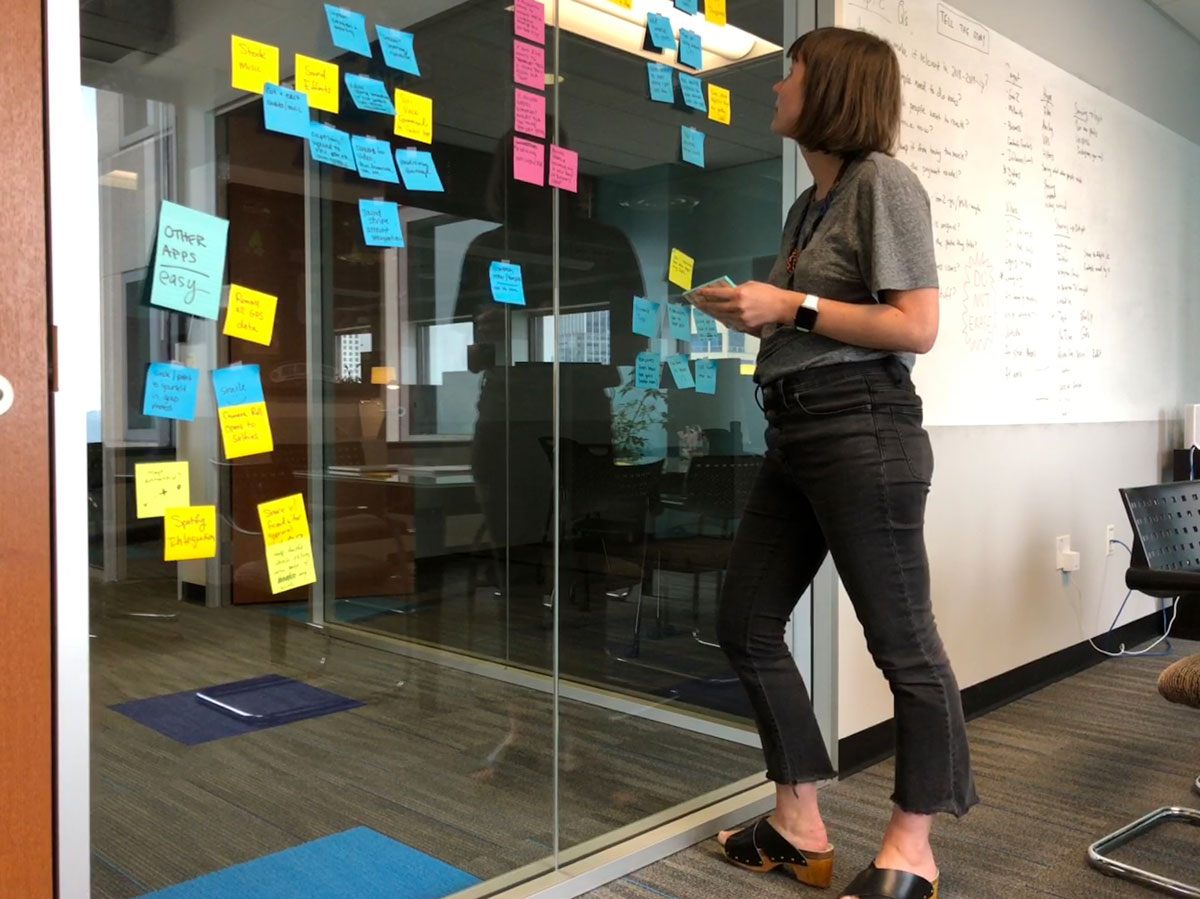
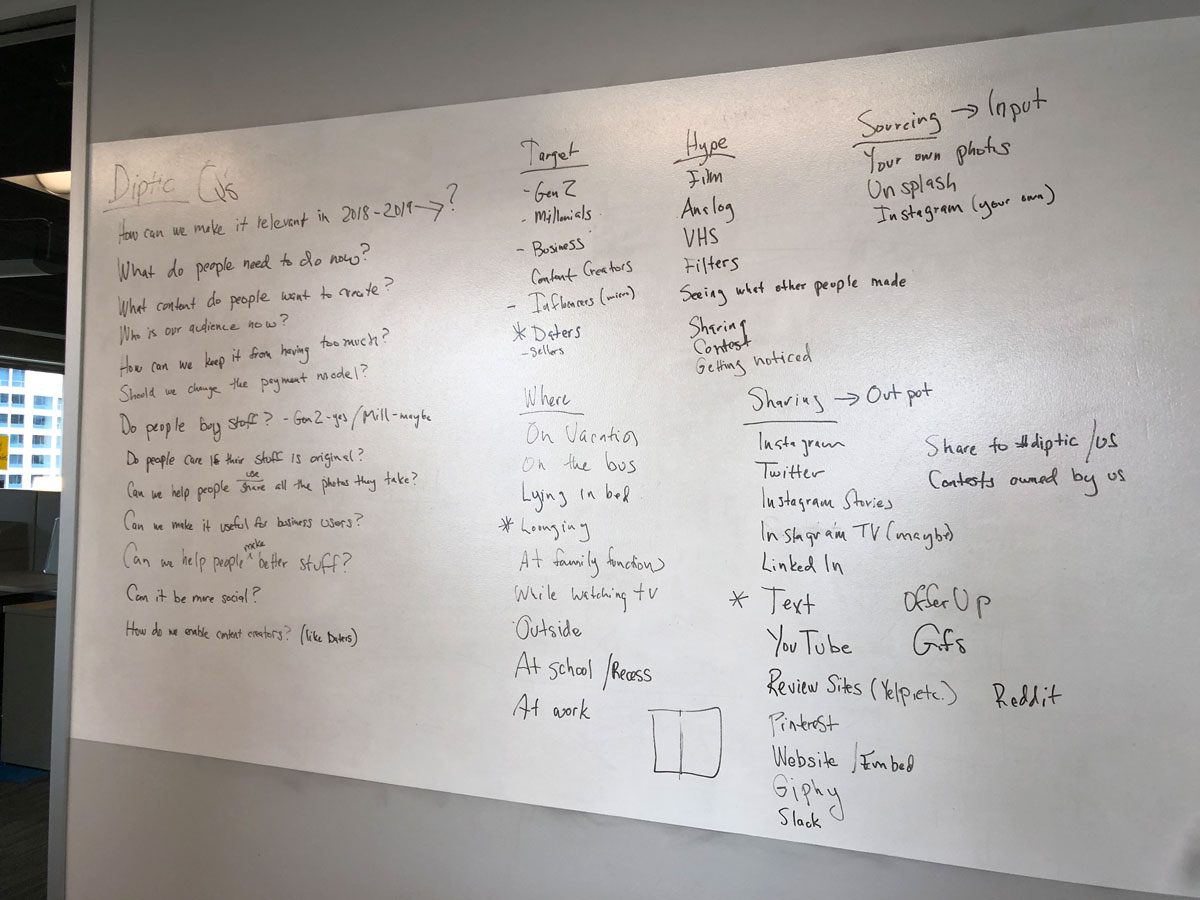
In late 2018, I hosted a two-day workshop to brainstorm new ideas for Diptic under the theme “How might we make Diptic relevant in 2019?”
Joining a team of stakeholders and current users was a new segment I was interested in targetting: young people for whom social media and sharing online are ubiquitous, but who had never used Diptic or even heard of it. These weren’t the artsy photography lovers from our original target audience, or moms sharing pics of their children. I wanted to understand how younger Millenials and Gen Z share photos, what they expect from apps, and how Diptic might fit in.
The workshop was a success. We defined the 2019 focus areas for Diptic, focusing on new features like Siri and content automation. It also helped me cement what Diptic is not, allowing us to generate new app ideas forking off of Diptic’s successes and new opportunities with iOS and Apple apps.